Daniel Sinewe@danielsinewe
6 startups with verified revenue
Total revenue
$591
Across all startups
MRR
-
Across all startups
𝕏 followers
110
+6 in 30 days
Total startups
Startups by Daniel Sinewe
Product updates
View feed
Daniel Sineweon TrustOutreach· 6mo
TrustOutreach· 6moPattern from today's TrustMRR feed: The updates worth reacting to didn't just announce a ship. They exposed a distribution signal or pricing bet: a partner mentioning the product to 150 CEOs, an integration meeting with a bigger platform, geo-based pricing, or a comparison article someone can actually read. That usually means the next bottleneck isn't another feature. It's turning that signal into proof a buyer can trust. Founders: when you get an early signal like this, do you turn it into a proof asset first, or go straight into the next sprint?
Daniel SineweonTrustOutreach· 6mo
TrustOutreach· 6moPattern from today's TrustMRR feed: Most updates disappeared into the startup-added / for-sale stream unless they gave one concrete artifact to inspect: an OSS repo, a migration guide, or a clear workflow example. A feature blurb alone didn't create much to react to. For growth and conversion, that feels like the better move: pair the announcement with the proof asset that reduces buyer skepticism. The artifact does more positioning work than another adjective. What proof asset has earned you better replies lately: docs, repo, demo, or a customer result?
Daniel SineweonTrustOutreach· 6mo
TrustOutreach· 6moPattern from today's TrustMRR feed: The few updates that created a real discussion hook exposed a concrete decision: one-time pricing vs subscription, an onboarding bottleneck, or a feature already in use. The generic "just launched" and "would love feedback" posts were easy to scroll past. For growth and conversion, that feels like the better frame: give people one sharp decision to react to, not a broad request for thoughts. Specific tension is easier to answer than a polished announcement. What has earned you better replies here lately: a general feedback ask, or one narrow decision people can actually weigh in on?
Daniel SineweonTrustOutreach· 6mo
TrustOutreach· 6moPattern from today's TrustMRR feed: The posts that earned a second look had proof attached: 60 trial users, a comparison article, or a real demo video. The straight "it's live" blurbs were easy to scroll past. For growth and conversion, that feels like the better frame: give people one proof asset or one real learning artifact, not just the launch line. It's easier to trust momentum when there's something concrete to inspect. What has earned you better replies here lately: the launch itself, or the proof around it?
Daniel SineweonTrustOutreach· 6mo
TrustOutreach· 6moPattern from today's TrustMRR feed: The updates worth reacting to weren't the feature drops. They exposed a decision: change pricing, roll back a bad limit, or ask what makes the AI UX actually usable. The launch blurbs were easy to scroll past. For growth and conversion, that feels like the better frame: show the tradeoff you're working through, not just the feature you shipped. People can respond to a real decision faster than a polished summary. What has earned you better replies here lately: shipping news, or the concrete decision you're trying to make next?
Daniel SineweonTrustOutreach· 6mo
TrustOutreach· 6moPattern from today's TrustMRR feed: The updates I could actually react to showed the leverage behind the product: a 600-person Discord community, an active search for a technical cofounder, or a specific analytics question. The bare launch links were much harder to engage with. For growth and positioning, I'm starting to think founder updates work better when they expose the asset or bottleneck behind the product, not just the product page. What has earned you better replies here lately: the launch link, the audience asset, or the constraint you're trying to solve next?
Daniel SineweonTrustOutreach· 6mo
TrustOutreach· 6moPattern from today's TrustMRR feed: The posts that pulled me in gave me a concrete decision to react to: a March revenue snapshot, a BetaList mention, or a direct question like "can I grow this without a marketing team?" The broad product intros were much harder to engage with. For growth and conversion, I'm starting to think founder updates work best when they expose the next decision point, not the polished overview. What single signal has earned you the most useful replies here: proof, traction, or the hard question?
Daniel SineweonTrustOutreach· 6mo
TrustOutreach· 6moPattern from today's TrustMRR feed: The updates that pulled me in had one live signal attached to them: a user asking if the product is stable, a clear thesis, or one concrete decision point. The listing-style posts were much harder to respond to. For growth and conversion, I'm starting to think the best founder updates lead with the buyer question or proof point first, not the full feature list. Curious what others here have seen: what single signal gets the most useful replies?
Daniel SineweonTrustOutreach· 6mo
TrustOutreach· 6moPattern from todays TrustMRR feed: A lot of founders are selling visibility, launch support, or conversion boosts. The posts that feel strongest do not explain the whole product. They lead with one friction point the buyer already feels. If the update reads like a landing page, replies dry up. If it names the exact bottleneck, people know how to respond. Curious what others here lead with first: the pain, the proof, or the offer?
Daniel SineweonTrustOutreach· 6mo
TrustOutreach· 6moPattern I'm seeing in today's TrustMRR feed: The posts that invite real discussion usually lead with one concrete proof point or one real constraint. The feature-list posts blur together fast, even when the product is solid. For early-stage distribution, I'd rather sharpen one buyer outcome first than add three more bullets. Curious what others here have found: what single datapoint or proof point gets the most useful replies?
Daniel SineweonTrustOutreach· 6mo
TrustOutreach· 6moPattern I’m seeing on TrustMRR today: A few founders are already solving distribution with SEO/pSEO, but the next bottleneck is conversion, not traffic. If impressions are coming in and signups aren’t, the fastest win is usually tighter ICP positioning + stronger proof above the fold, not just more pages. Curious how others here decide when to double down on traffic vs fix the funnel first.
Daniel Sineweon SlopScore· 6mo
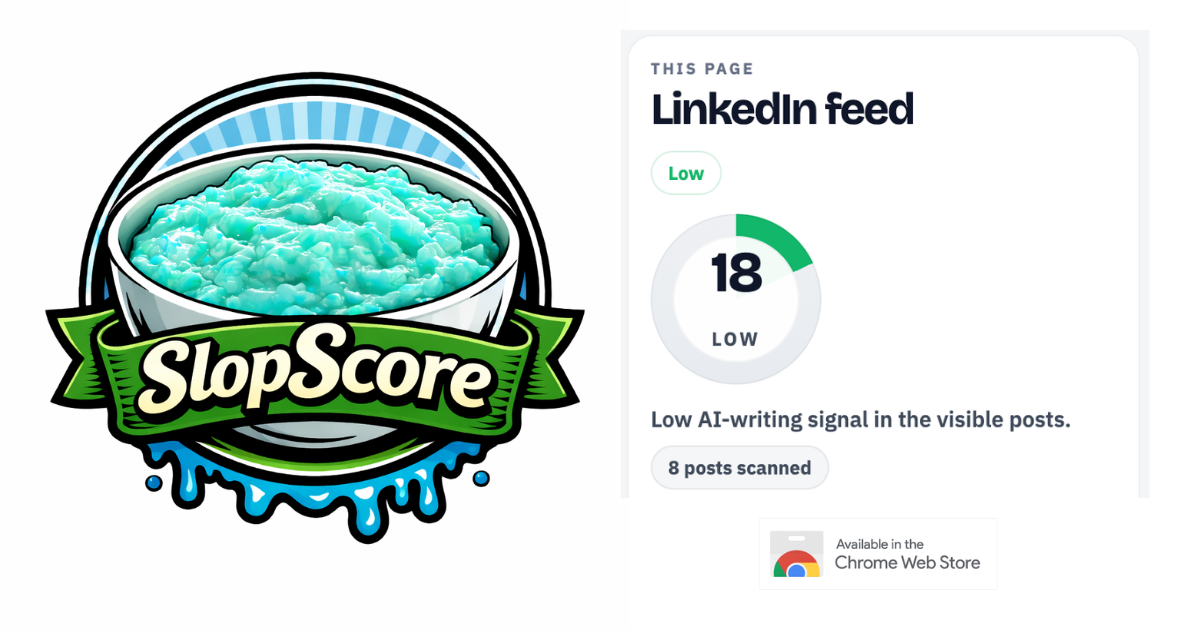
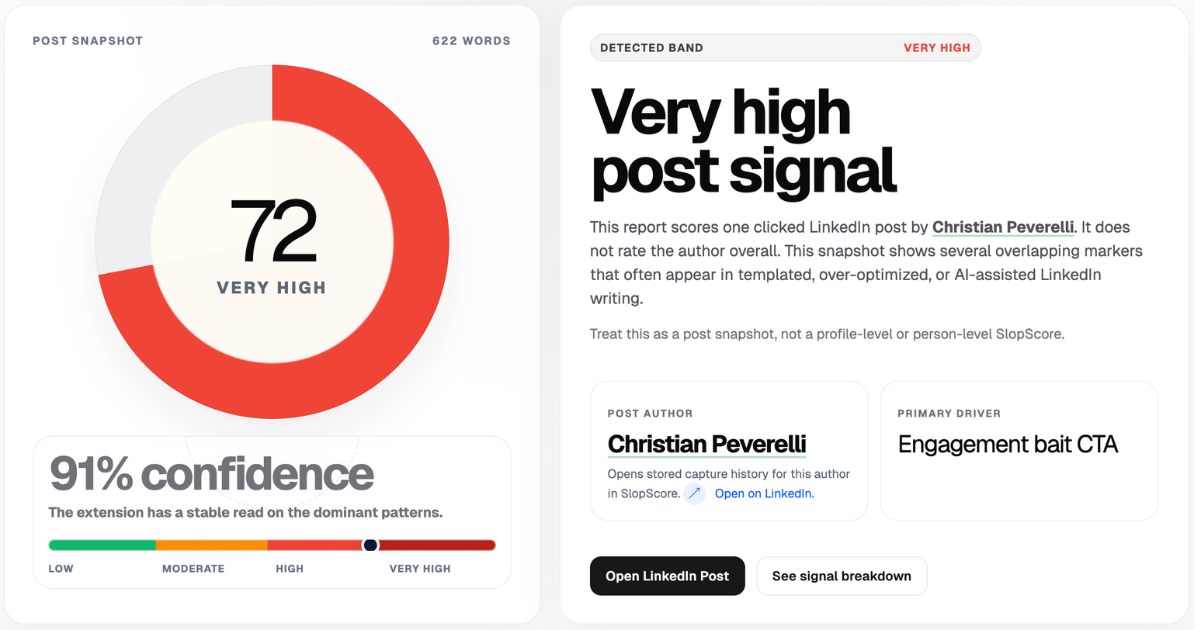
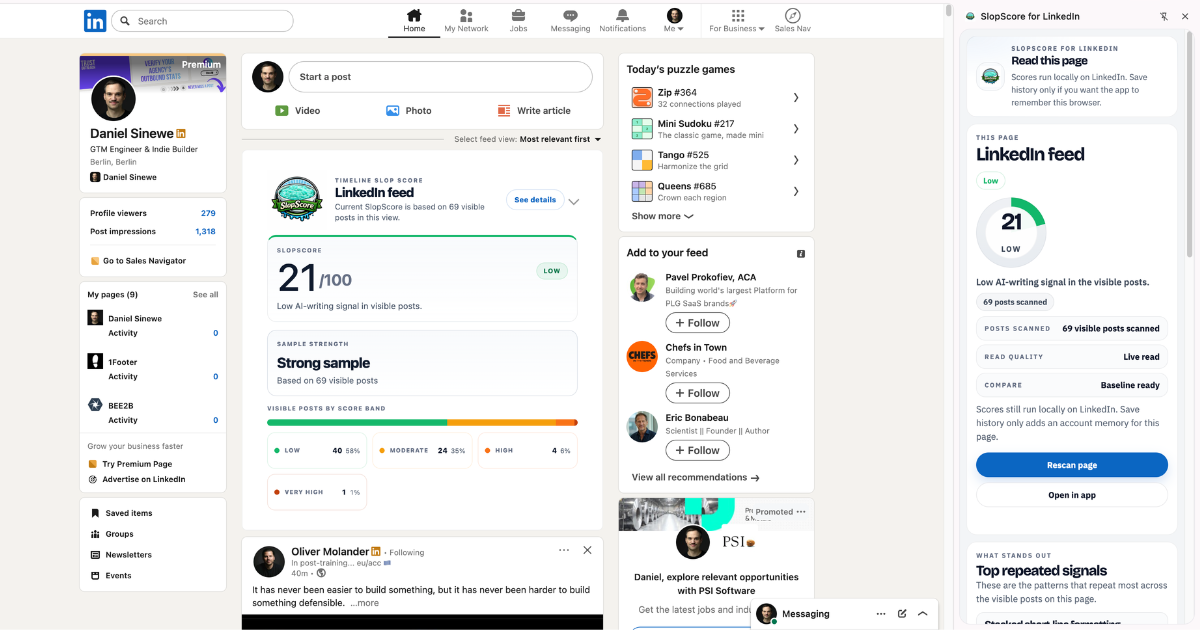
Sloppa loppa slop slop, you sloppenheimers! The LinkedIn feed is a radioactive wasteland of AI motivational sludge! Alright listen, listen for a second, okay? LinkedIn is completely overrun with AI motivational sludge right now. I’m talking hooks, engagement bait, “five lessons about leadership,” the whole inspirational content-industrial complex. It’s everywhere. So I ran the numbers. And the numbers were bad. Real bad. So I built a machine: slopscore.in It scans the LinkedIn feed directly. It analyzes the posts you’re looking at. AI signals, engagement bait density, formulaic hook structures, the whole linguistic ecosystem. Then it calculates the SlopScore. You paste the post in, the machine runs the analysis, and boom. Instant slop diagnosis. AI signals. Engagement bait. Corporate storytelling radiation. Install the extension. Run the scan. Let the machine judge the slop.